Just like old times.



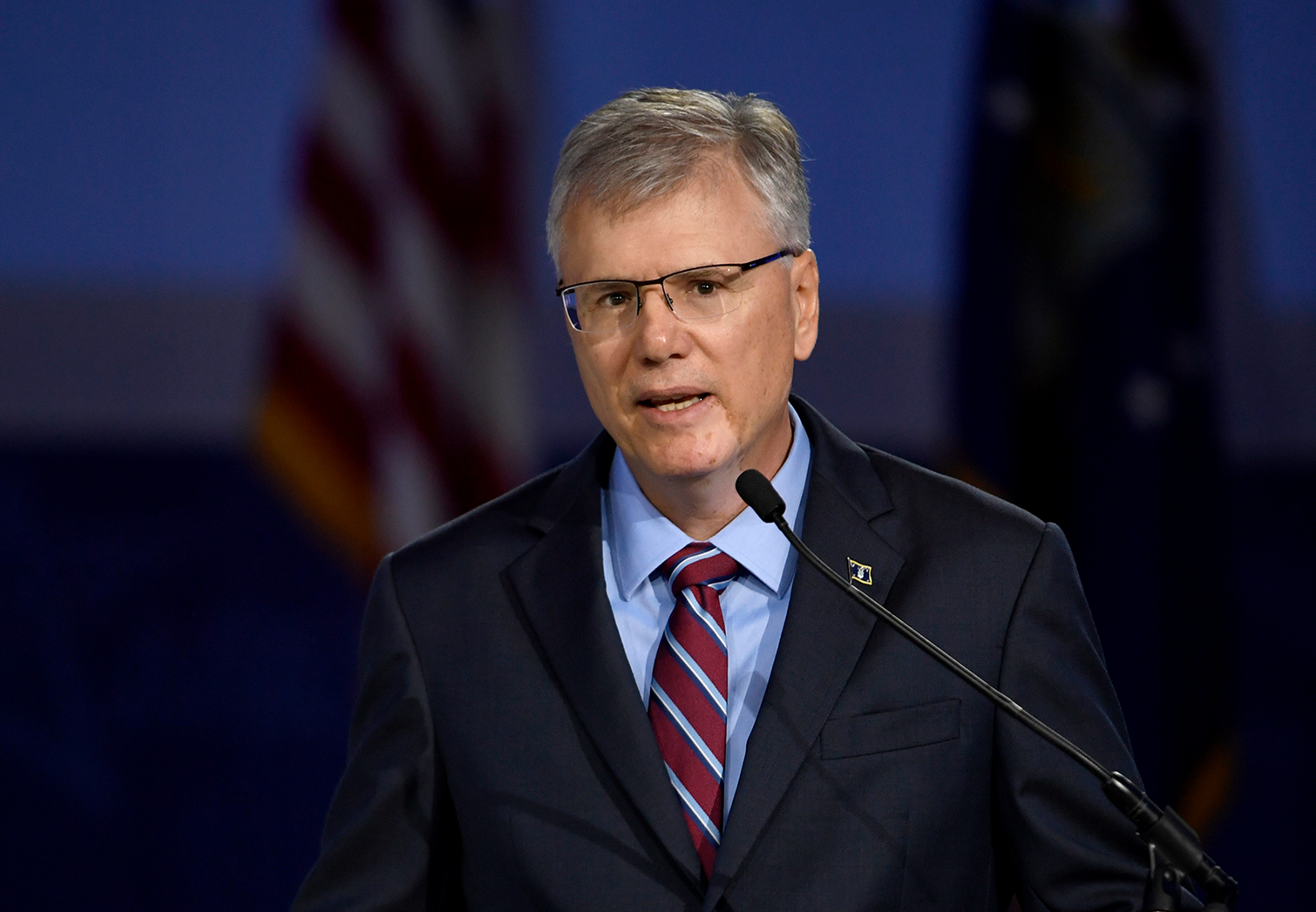
After a tumultuous week for the Pentagon, the commander of USSOCOM went to Capitol Hill to brief lawmakers on the Sept. 2 drug boat strike with an expectedly partisan response.
Dig Deeper
As the government's attention is drawn more and more to the USSOUTHCOM area of responsibility, the Wall Street Journal reports defense industry is already adapting to changing demand signals from the Pentagon.
As expected, the administration will shift its focus to the Western Hemisphere, including drug trafficking and stemming migration, according to the new NSS.
After a delay of the bill text that was expected to be released Thursday, the language for the annual defense bill is now likely to be made public Saturday or Sunday.
Recent headlines that have shown AI is quickly getting creative beyond its intended bounds, prompting serious questions about how to prepare for military application of agentic AI.
The changes walk back much of former Air Force Secretary Frank Kendall's “Reoptimization for Great Power Competition" plan.
Called the Drone Dominance Program, or DDP, the program is a realization of Sec. Hegseth’s July "Unleashing U.S. Military Drone Dominance" memo.
While agencies are currently facing reduced budgets, the Professional Services Council expects that trend will continue due to the potential exhaustion of Medicare and Social Security funding.
"If 'production is deterrence,' then today’s defense acquisition system invites, rather than deters, conflict."
The pledge adds granularity to a much broader $1.5 trillion “Security and Resiliency Initiative” announced by the bank in October.
The Pentagon is withholding details about prototypes awarded under OTAs for the Golden Dome initiative, which are not subject to standard disclosure requirements.
The Trump Administration's push for more commercial off-the-shelf solutions could lead to a breakthrough for open standards in military systems, experts say.

Congress had to wrestle this week with the White House's push to include federal policy language in the NDAA that would block states’ ability to regulate AI, which ruffled feathers among skeptical GOP lawmakers.
Dig Deeper
Writing for State Scoop, two members of the Association for Computing Machinery’s U.S. Technology Policy Committee argue Congress should reject proposals that block state AI regulations, whether that happens through legislative or executive action. Check out Reason for the counter argument.
Why you should read The MC Post every Saturday morning.
We’re bringing back the familiar comfort of unfolding the weekend newspaper and catching up on the headlines, without the tacky popups, scammy ads, or bait-and-switch paywalls that you’ve come to know and hate. In a world racing toward AI-generated content, the MC Post is curated by people for people. Brought to you by Mission Cultivate—the free networking platform for defense and national security pros.
feature Commentaries
U.S. Representative Zach Nunn provides concrete steps both Congress and the SEC can take to improve a strained industrial base.
The Pentagon's leader for industrial policy says the acquisition regulation overhaul will create openings for artificial intelligence-enabled service models and drive a move away from traditional contracts.
This commentary argues the U.S. military’s procurement system is collapsing at a critical moment, exemplified by the failure of the Navy’s Constellation-class frigate program that indicates a "deeper rot."


Startups can’t afford to be wrong on an 18-month cycle—and neither can the services or the acquisition system that supports them. Callye Keen and Noah Sheinbaum deconstruct the so-called “valley of death.”
This video highlights some of the most significant breakthroughs born from NRL's research, showcasing how these innovations have led to inventions we use every day.
Editor's Notes
It was a chaotic week in defense news, with the nation’s focus squarely on senior leadership and the ongoing strikes against suspected Venezuelan narcotics traffickers. Cutting through the noise of the legal and political discussions, this week culminated in the much anticipated release of the Trump Administration’s new National Security Strategy, which many had expected to refocus American might on matters closer to home, bumping ‘great power competition’ and the Indo-Pacific down at least a rung. Those people were not disappointed.
The NSS is out and it does indeed prioritize American interests in our own hemisphere in what it calls a “Trump Corollary” to the Monroe Doctrine. If you’re unfamiliar, that was President James Monroe’s policy that claimed the Americas for America, pushing back against European involvement. I think the intent here is mostly bringing domestic and foreign policy topics a little closer together, but the same historical signals to Europe appear in this document too. It calls out a number things related to Europe, including a “lack of self-confidence” in its response to Russia while also recognizing the significant cultural ties between us. Overall, it's quite critical of our allies at an inflection point in the war in Ukraine. I expect this will be a big topic of conversation in the coming days and weeks.
In short succession, we can expect an updated National Defense Strategy to follow. Breaking Defense reported this week that Sec. Pete Hegseth is rumored to make a potential appearance at the Reagan National Defense Forum in Simi Valley, California, this weekend where he *might* introduce the updated strategy doc for the department.
As we wait for that and the shuffle of priorities and demand signals that will follow, I’d call your attention this week to the article from MC’s own Jerry Ramey called “Can Will Smith save our military from the robots?” If you’re a sci-fi fan, a philosophy nerd, or ideally both, this one’s for you. He looks at the ever-increasing pace of artificial intelligence and asks if Isaac Asimov was onto something more than 80 years ago.
Happy reading,
| Beau Downey, Editor
P.S. For no particular reason, if you're having qualms about using Signal after this week, I'd encourage you to check out MC.
The views represented in this commentary are my own and do not constitute endorsement by the Department of Defense or the US Government.

More In Depth
Last week's executive order directs the Department of Energy to build a “closed-loop AI experimentation platform” that links national laboratories and federal supercomputers into “one cooperative system for research.”
An excellent primer on the Small Business Innovation Research program that argues there is still valuable potential for its continuation amid the ongoing renewal debate.
This case study looks at a large language model that predates ChatGPT and offers lessons learned from how the DOD adapted and employed an innovative effort alongside industry.
Happening on MC
If you're not on Mission Cultivate, here's just some of what you're missing.
Opportunities
Event Conversations
Continue Reading
Some officials are concerned the new approach hinders the administration's efforts to relieve the burden of federal acquisition and encourage vendors participation.
The SAMOSA Act, which would require agencies to review their IT purchases and streamline buying decisions, has been in this position before.
"Rising prices are turning each PCS into a financial battle families say they are losing."
A broader Pentagon goal to shrink the nation’s defense budget over the coming five years could potentially subject the agency to further downsizing.
OPM is encouraging agencies to consider reassigning SES leadership "to ensure effective implementation of President Donald Trump's priorities and agency missions."
"Early-stage drone startups are suddenly winning contracts once typically reserved for more established defense companies, a frenzy that has turned 2025 into a breakout year for drones across both defense and commercial markets."
Government CISOs face an unprecedented challenge: protecting national services, citizen data, and democratic institutions from a rising wave of cyber threats.
For the CAML effort, the Army is interested in autonomous vehicles that could move around the battlefield and shoot missiles at adversaries.
Leaders at DLA say contract obligations grew steadily in fiscal year 2025 and are expected to continue to grow in fiscal year 2026.

Permission to speak freely.
Mission Cultivate is the free, discreet networking platform for Defense and NatSec. Stop censoring yourself and start connecting in the only space made just for you.
See Mission CultivateHeads up: MC is only for verified users in Defense/War & NatSec. Users include gov, industry, academia, vc, and more. Only available to US, NATO, or select major US allies.