Just like old times.



As a massive number of U.S. military assets converge on the CENTCOM area of responsibility and the world waits to see if diplomacy will prevail, experts warn that an Iranian government pushed into "survival mode" is likely to react recklessly.
Dig Deeper
In the face of mounting pressure, Iran signaled Friday that it was open to resuming talks about its nuclear program, according to Axios. And the Atlantic Council's Dispatches explored some humble predictions of what might happen next if the U.S. moves forward with a strike.
The deal, which now needs to be approved by the House next week, includes a two-week continuing resolution for DHS funding and five bills that would fund a large portion of the federal government, including defense, for the rest of the fiscal year.
The program has been bogged down by technical disputes and concerns over space‑based components that have delayed the release of billions of dollars.
The report, released Tuesday, said that the military lacks consistent guidance for defending sensitive "covered assets" against offensive uncrewed aircraft.
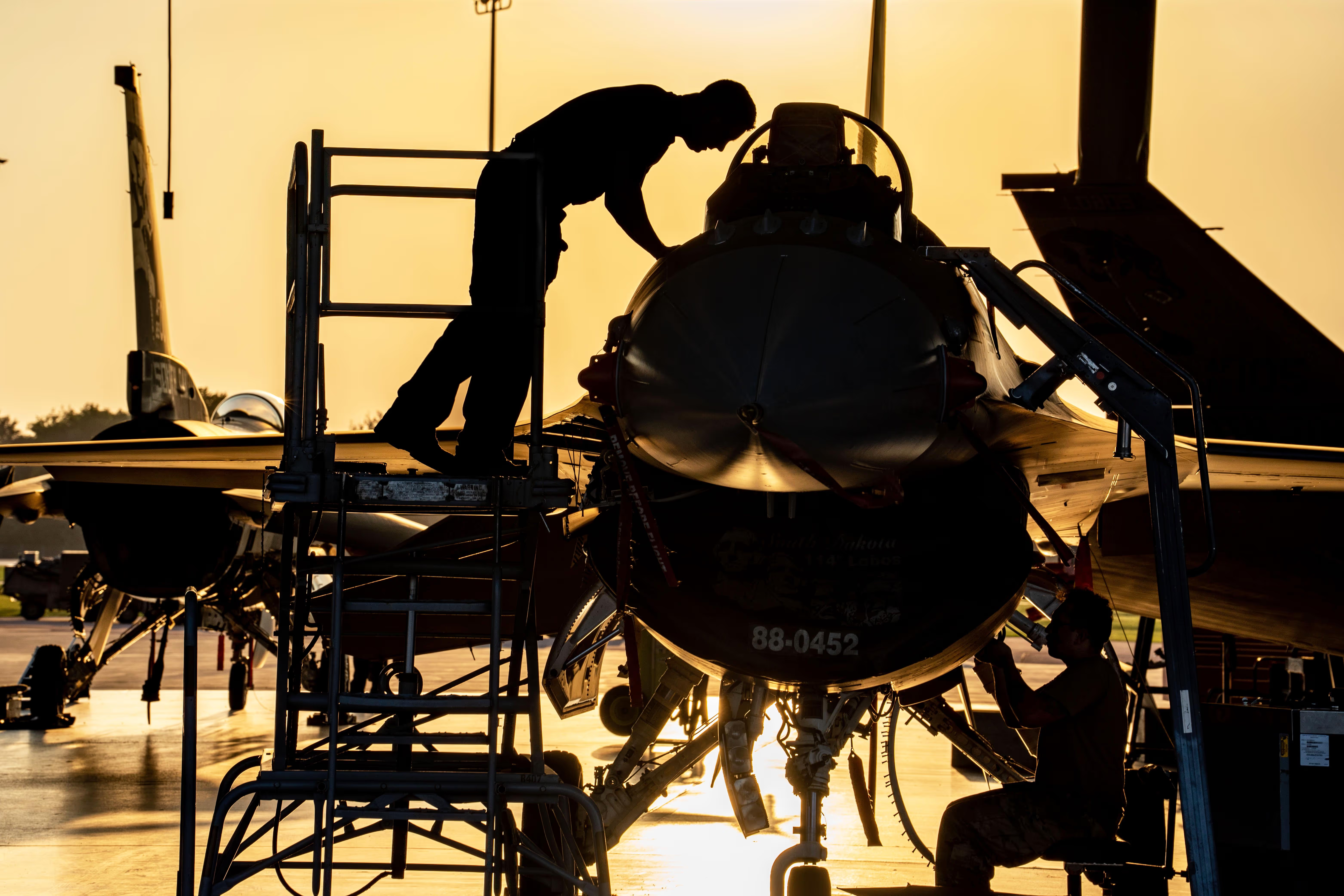
The U.S. Air Force is in its second year of an updated format for its Squadron Innovation Fund marketplace that meets the moment as the Pentagon calls for faster capabilities to warfighters.
This article had me hooked in the first two lines. Meet Clawdbot—the open source personal AI that tens of thousands of people installed this week, and that the national security community should be paying very close attention to.
Unlike previous iterations that included a wide range of existing and emerging warfighting technologies, this one has few mentions of particular capabilities and focuses much more on commercially available solutions.
The interim director of CISA triggered an internal cybersecurity warning with the uploads—and a DHS-level damage assessment.
The disagreement centers on safeguards that would prevent the government from deploying its technology to target weapons autonomously and conduct U.S. domestic surveillance.
The DoW's Office of Small Business Programs announced the launch of a new digital platform designed to strengthen supplier readiness, improve visibility into business capabilities, and expand participation across the defense industrial base.
The drone, produced by II MEF's Innovation Campus, meets the NDAA's compliance requirement to be resistant to potential backdoors in electronic components.
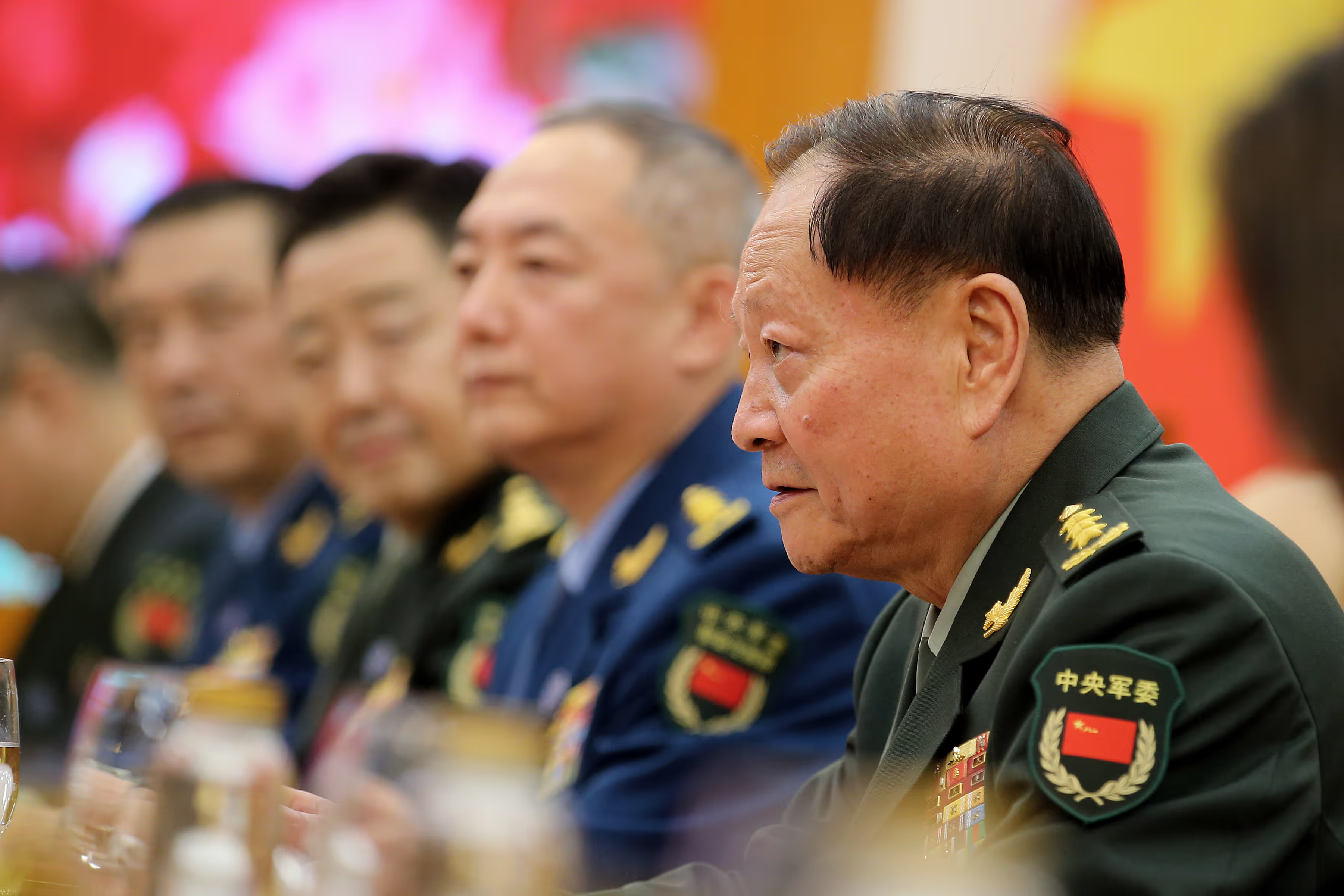
China’s military leadership is in turmoil after its most senior general—a close ally of Chinese President Xi Jinping—was placed under investigation for "suspected serious violations of discipline and law," including leaking information about the country’s nuclear weapons program to the U.S.
Dig Deeper
CNBC took a closer look at China's military purge with a panel discussion. Also this week, the Republican head of the House China committee accused Nvidia Corp. of providing technical support to DeepSeek—whose models have been used for Chinese "military hospitals and defense mobilization planning units"—in defiance of U.S. export controls, according to Bloomberg.
Why you should read The MC Post every Saturday morning.
We’re bringing back the familiar comfort of unfolding the weekend newspaper and catching up on the headlines, without the tacky popups, scammy ads, or bait-and-switch paywalls that you’ve come to know and hate. In a world racing toward AI-generated content, the MC Post is curated by people for people. Brought to you by Mission Cultivate—the free networking platform for defense and national security pros.
Feature Commentaries
Federal funding flows to research labs and prime contractors, but the companies best positioned to turn prototypes into production are starving for capital, says Stephen Empedocles, CEO of Clark Street Associates.
The real barrier to commercial acquisition is not a lack of legal authority—it's how the workforce has been trained, reviewed, and incentivized. Fixing this will require leadership-driven change, argues Bonnie Evangelista.
As the U.S. continues to remind Europeans that they must be able to shoulder the burden of their own defense, the question now is how Europeans can best accomplish this, says Oleksiy Honcharuk, former prime minister of Ukraine.


Recorded on the sidelines of the Apex Defense Conference this week, dive into the biggest challenges to the defense supply chain and how artificial intelligence combined with thoughtful policy changes can help the Pentagon.
Usually I don't go more than a week back, but this candid conversation featuring Rise8's CEO, Bryon Kroger, about what's broken in federal software delivery was worth circling back for.
Editor's Notes
I’m starting to wonder why we decided on a Saturday publication rhythm for this product, because it seems like every week there are three or four big news items spinning in the air that could rapidly change over Friday night. What used to be “take out the trash day” for headlines has become the main event! If that’s the case this time with the potential partial government shutdown or the increasingly tense situation with Iran, just know I did my best. Last week, that happened with the release of the unclassified readout of the new National Defense Strategy, which came at COB as everyone hunkered down for the snowpocalypse. Since we didn’t get to talk about, let me give you my quick thoughts.
Language matters, and the NDS (and documents like it) is foremost a tool for synchronizing language. It is a way for the Pentagon to say "here is what we're focused on, and here is how we’re talking about it specifically.” When you view it that way, looking at the document through the lens of what is actually said or not said changes your perspective. Here’s an example:
Number of times the word "competition" or "competitor" appeared in the unclassified 2022 NDS readout: 65
Number of times it appears in this one: 0
It’s a bright signal that the language has changed. China is no longer a "pacing challenge." It's not a "competitor." It's not even a "near-peer competitor"—honestly that one died a while ago. People will still use them. They're zombie words that identify if you're paying attention. If you're curious, the phrase that stands out to me in the new NDS is "balance of power." It evokes the idea of spheres of influence echoed throughout the document. Expect that to be a new way we talk about the Indo-Pacific. For a much more granular look at the changes across the last few iterations of the NDS, make sure you check out this week’s More In Depth section for CSIS’s take.
And, of course, we’re back with more original content this week. Stacey Kessler dives into why the Air Force’s approach to crowdsourcing its funding for warfighter innovation meets the moment as the DoW tries to get capabilities faster. And Jerry Ramey fires back at the idea of the Army giving Salesforce a bajillion dollars. That one is a new response-style feature where you can get our (probably spicier) takes on select news of the week.
Happy reading.
| Beau Downey, Editor
The views represented in this commentary are my own and do not constitute endorsement by the Department of Defense or the U.S. Government.

More In Depth
Track U.S. defense policy over time, and see what's changed, what's really changed, and what has stayed the same in this in-depth look at the new NDS the Pentagon released last week.
Defense procurement has historically sent erratic signals downstream: a surge during conflict, with contraction afterward. While that volatility is manageable for primes, it’s existential for smaller suppliers.
This paradigm leads to wasted resources, stagnation, and missed opportunities to harness cutting-edge capabilities. Leveraging alternative and innovative acquisition methods accelerates the potential of rapid acquisition frameworks that deliberately enable government contracts to "fail fast."
Happening on MC
If you're not on Mission Cultivate, here's just some of what you're missing.
Event Conversations
Continue Reading
"The lapse ... further jeopardizes commercialization and scaling of cutting-edge technologies that are essential for U.S. leadership and preserving our asymmetric advantage," the groups wrote.
In a press release Monday, Salesforce said the company's offerings under the agreement will help connect the military's disparate data sources and systems into a more unified platform ... We have thoughts.
The administration's pick told lawmakers Thursday he supports the use of Section 702 of the Foreign Intelligence Surveillance Act—a contentious foreign spying power he argues is "indispensable" and critical for national security.
Blue UAS is under new management, transitioning from the Defense Innovation Unit to the Defense Contract Management Agency and moving the initiative into a new phase.
The program's lead said success depends on the ability to field scalable and affordable defenses, including new directed-energy and other non-kinetic tech aimed at lowering the cost of intercepting missiles.
Treasury says the reason for cancelling these contracts is directly related to a former Booz Allen employee, Charles Littlejohn, who is serving five years in prison for disclosing thousands of tax returns without authorization.

LinkedIn: B*mb
Mission Cultivate: Bomb
Mission Cultivate is the free, discreet networking platform for Defense and NatSec. Stop censoring yourself and speak freely in the only space made just for you.
See Mission CultivateHeads up: MC is only for verified users in Defense/War & NatSec. Users include gov, industry, academia, vc, and more. Only available to US, NATO, or select major US allies.