The Skills AI Can't Replicate — And Why Defence Needs Them More Than Most
As AI makes technical and administrative work easier to automate, defence organisations must double down on the human skills machines cannot replicate.
Artificial intelligence hasn't made human skills less relevant. Quite the contrary. It's made the gap between people who have them and people who don't far more expensive to ignore.
That’s what I’ve landed on after 14 years doing something that, on paper, should have been automated out of existence by now. I run a founder community — 23,000 members, 30-plus cities, 10 countries — built entirely on the premise that putting the right humans in a room together still creates something that no algorithm has managed to replicate. No outside funding. No growth hacks. Just a lot of very deliberate, intentional human activity applied consistently over a long time.
Nowhere is arguably more consequential for that gap to exist than in the aerospace and defence sector — an industry whose entire operating model depends on things AI is structurally bad at: leadership under pressure, ecosystems built on trust, and the kind of moral architecture that holds societies together when the stakes get high.
What actually changed
Much like the Industrial Revolution democratised the ability to move and lift heavy things, AI has brought an intellectual revolution that democratises access to administrative speed and process.
For most of knowledge work's history, the cognitive tasks that earned you a seat at the table were genuinely difficult. Synthesising information, drafting communications, analysing patterns, producing structured output — they all required time, training and a certain tolerance for tedium (something abundant in a sector powered by people trained on discipline).
The people who could do them quickly and reliably had a real edge.
That edge is now all but gone. Or rather, it's been redistributed to anyone with a decent internet connection and a clear prompt. The tasks themselves haven't disappeared; they've just ceased being the thing that differentiates you from your colleagues, your competition, your enemy.
In defence and high-trust industry environments, this matters differently than it does in, say, a SaaS startup. The stakes attached to decisions are higher. The relationships underpinning contracts, partnerships and intelligence-sharing take years to build and seconds to damage. The judgment calls that matter most: who do you trust, what's the right call under pressure, where does the data end and the context begin? The intuition required to find answers to these questions doesn’t arrive in a format you can hand to an LLM. It arrives as [often urgent] situations that require more nuanced, human insight.
There’s no question your industry will be touched by AI. Instead, you should ask if the humans in your organisation have invested in the vital skills AI can't replicate. In defence, the skills in question do not merely shape workplace performance. They can influence national security, shape operational outcomes, and, in the most serious moments, constitute matters of life and death.
The skills that moved up the hierarchy
When I asked myself what actually built my network, the honest answer wasn't charisma or proximity to the right people. In hindsight, it was a specific set of practices — things I'd developed deliberately, not inherited, that compounded over time.
Those skills now see me referred to regularly as a “Superconnector” — a shorthand title for someone who often begs the question: “How does he know everyone?”
The skills that act as the foundation for this descriptor are, in review, hardest to automate (trust me, I regularly try to). They also map, with uncomfortable precision, onto what aerospace and defence actually needs from its people right now.
Discernment. Not intelligence, discernment. The ability to read a situation, a room, or a person and understand what's actually going on rather than what's being presented. In a founder community, this separates the people who end up being genuinely useful to each other from the people who spam business cards to one another in the hope of a deal. In a defence context, it's the thing that makes or breaks leadership and teams. A well-produced briefing document and a trustworthy intelligence picture are not the same thing, and a language model isn't the one who's going to tell you the difference. Neither is someone who's never had to make a call with incomplete information and live with what followed.
Originality. Not creativity in the abstract — original thinking, with context. The ability to bring something to a problem that isn't the obvious move, that can't be generated by averaging a billion data points. Sometimes called intuition. This is what makes someone genuinely valuable in a room versus someone who's good at reciting what they prepared. Defence ecosystems — supplier networks, joint ventures, government-industry relationships — are built by people who can see the non-obvious connection, the partnership nobody thought to try, the application of a technology in a domain it wasn't designed for. That’s where nations get their edge. And that capacity doesn't live in an AI model. It lives in people who've spent years building pattern recognition through real relationships between meeting rooms and active war zones.
Moral judgement. This one is increasingly uncomfortable to talk about in professional contexts, which is precisely why it matters more than ever. AI systems are trained on data produced by humans, which means they carry all of our historical biases and none of our contextual conscience. The judgment about what to do with information (not just what's technically correct, but what's right) still lands with “the human in the chair”. In an industry that sits at the intersection of national security, international law and societal consequence, this isn't a “soft” skill — it's vital infrastructure. Societies don't hold together because the systems are good. They hold together because enough of the people inside those systems take their moral responsibilities seriously, even when it's inconvenient.
Empathy, properly deployed. I want to be careful here because "empathy" has been polished so smooth in corporate communications that it means almost nothing anymore. What I'm talking about is the practical ability to understand what someone else actually needs, as opposed to what they asked for — and to lead on decision-making accordingly, with that in mind. In community building, this is the difference between an event that delivers genuine impact and joy, and one that feels like conversations for conversation's sake. In defence leadership and ecosystem management, it's what separates a chain of command that functions under pressure from one that fractures when things get hard. People follow leaders who understand them, not just leaders with good resumes. The dense, interdependent webs of contractors, primes, government bodies and academic partners that underpin the sector’s ecosystems don't function on contracts alone — they function on relationships, which are built by people with these exact skills.
What 14 years building ecosystems teaches you about this
The thing about building a large community from zero, with no budget, is that you learn very quickly what actually keeps people showing up. It isn't content. It isn't programming. It isn't a particularly good website (as anyone who saw the first 5 versions of ours over the first 7 years of our existence can confirm).
What keeps people showing up is other people. Specifically, the feeling that someone in the room understands what they're trying to do, cares whether they succeed, and knows someone who might be able to help. That feeling is produced by humans with specific skills, applied deliberately, over a long time. It compounds. It also doesn't transfer to a Slack channel or a LinkedIn group or any other digital proxy without attention, training, and cultural embedding, despite what a lot of very confident product people will tell you.
The defence and aerospace ecosystem has the same dynamics, just with often even longer timelines, higher barriers to entry and considerably more paperwork. The relationships that get the right conversation in front of the right decision-maker at the right moment, that hold a supply chain together when a programme hits difficulty, and that build the kind of cross-sector trust that actually produces innovation are human all the way down. Technology accelerates them. It doesn't replace them.
Companies working in the defence space are scrambling to employ AI. They have to so they can remain competitive. What worries me, and I think should worry anyone thinking seriously about this, is that the AI conversation can create a convenient reason to underinvest in the human skills that underpin these ecosystems. If the tools are getting better, the reasoning goes, maybe we need fewer of the expensive, slow, unpredictable humans who used to hold everything together. That reasoning is wrong and, in an industry with the societal responsibilities that defence carries, is expensively wrong.
The practical implication
I'm not making an argument against AI adoption. I’m absolutely pro-AI. It’s futile not to be. But I’m also pro-Human.
I work in an environment where a lot of very smart founders are building with these tools, and the upside is real. What I'm pushing back on is the implicit assumption underneath a lot of the AI conversation that treats human skill as a legacy system to be patched or replaced, rather than the thing that gives any of this leverage.
The professionals who will thrive in the next decade are not the ones who resist the tools, nor the ones who delegate everything they possibly can to them. They're the ones who understand which decisions require a human in the room, and have done the work to make sure that when a human needs to be in the room, they're the one worth having there.
Good leadership, healthy ecosystems, functioning societal structures — none of these are outputs of better software. They're outputs of people who've invested in the skills that remain stubbornly, usefully, necessarily human.
In high-stakes industries, that isn't a competitive advantage. It's a professional responsibility.
AI may well accelerate the safety or destruction of our world. The version of events that unfolds from here is down to the distinctly human humans using it. After all, as Stan Lee famously wrote: “With great power comes great responsibility.”
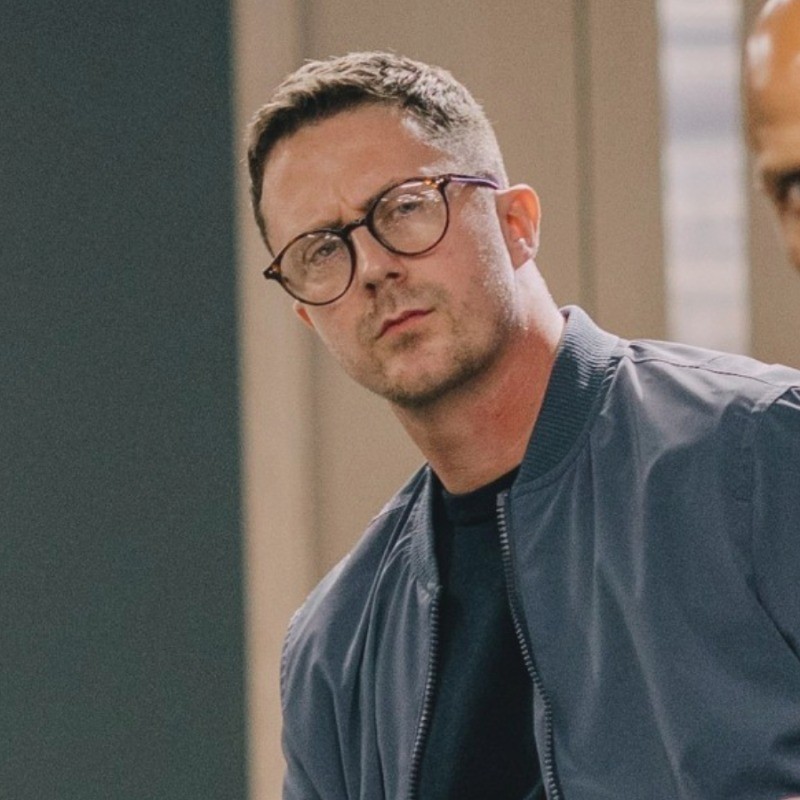
Ash Phillips is the founder of Rebellious Co and Rebel Meetups, a 14-year-old founder community with 23,000-plus members across 30-plus cities in 10 countries. He supports founders, consults organisations on better ecosystem design, innovation programming, and writes & speaks on human connection, community strategy, and the Superconnector methodology.
It's 100% Free to Subscribe to The MC Post
The MC Post is a weekly curated Defense publication. We publish a new edition every Saturday morning. If you're the type who wants to know about things the minute they happen, The MC Post may not be for you. But if you, like most of us, don't have time to refresh dozens of sources every day, we invite you to slow down, grab your coffee, and catch up on what matters each Saturday–just like old times.