Drone Dominance Is a Manufacturing Test. Most Drone Companies Will Fail It.
Why the Drone Dominance Program is less about drone design and more about manufacturing scale.

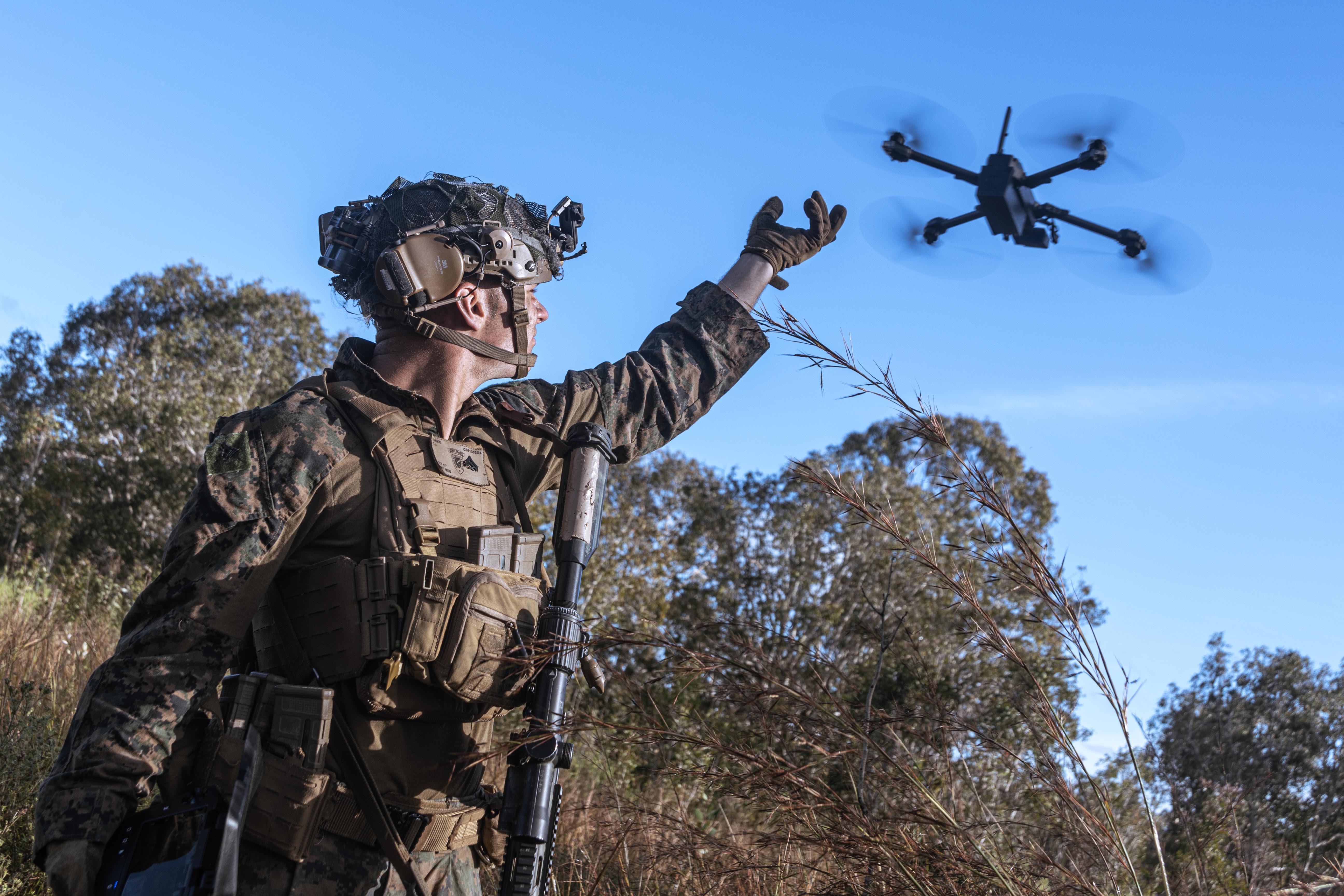
The Pentagon doesn't need help finding good drone designs. Hundreds of American companies can build a capable UAV. What they don't know is whether American manufacturing can scale. The Drone Dominance Program—the challenge to industry announced late last year intended to push companies to scale—isn't a drone procurement issue, but a stress test of the U.S. industrial base, with most drone companies studying for the wrong exam.
Look at the structure of the DDP’s Gauntlet challenges: fixed-price contracts, payment only on delivery, vendors bearing all manufacturing risk. Phase I wants 30,000 drones at $5,000 per unit in six months. By Phase IV, survivors must deliver 150,000 units at $2,300 each—a 54 percent cost reduction while scaling 5x. That's not how you buy drones. That's how you pressure-test manufacturing capability.
Most drone companies are innovative airframers. Strong on design but light on production experience, supply chain management and quality systems. The Gauntlet will expose that gap fast. The companies that survive will be the ones who figure out they're actually being tested on.
Ukraine Builds 20x More Drones Than We Do
The U.S. drone industry has roughly 500 companies collectively producing under 100,000 units annually. Ukraine produces 2 million. The gap isn't design capability, it's manufacturing infrastructure.
"The U.S. lacks the tooling, dies, molds and automated lines needed to jump from thousands of units to true mass production,” Volodymyr Silchenko, a defense-tech founder, wrote in Forbes. “Tooling is the part many people skip. Designing and building specialized tooling can take months and cost tens to hundreds of thousands of dollars."
Airframers can't build a manufacturing facility between Phase I selection and the July 2026 delivery deadline. They can't hire and train a production workforce or develop quality management systems that satisfy defense procurement in five months. The Pentagon knows this. That's why the Gauntlet is structured how it is—so the Pentagon can discover who already has manufacturing figured out or who's smart enough to partner with someone who does.
Contract Manufacturing Is the Answer
Contract manufacturers exist because manufacturing at scale is its own discipline, and it's not the one drone companies built themselves around. Contract manufacturers have already built the infrastructure. They already made the capital investments. They already figured out quality systems and supply chain resilience. That means airframers are paying for output, not buildings.
There's also the risk question. According to the Phase I release, "Vendors will bear development and manufacturing risk." That's a polite way of saying if you can't deliver, you don't get paid. Established contract manufacturers have already figured out quality management, supply chain resilience and production scaling. They made those mistakes on someone else's dime.
And good manufacturers don't just build what airframers design. They'll advise on which tolerances are driving up costs and the assembly sequences that will create quality problems at scale. That kind of design-for-manufacturing feedback is worth more than most drone companies realize until they're staring at a 30,000-unit order.
Then there's compliance. ITAR registration, CMMC certification, quality systems that satisfy defense primes—this stuff takes years. Contract manufacturers serving the defense industrial base already operate within this framework. Gauntlet players don't have years.
You Need Engineers, Not Just Suppliers
Not every contract manufacturer is set up for this type of scale. You want a partner who has done high-stakes work at serious volume with near-perfect quality metrics and consistent on-time delivery. The specific industry matters less than the track record. Can they prove they've shipped tens of thousands of precision parts where failure wasn't an option?
More importantly, you want a partner who will push back on your designs. The best contract manufacturers consult on manufacturability. They'll tell you when an innovative design is going to be a nightmare to produce at scale, and they'll suggest alternatives that maintain performance while actually being feasible to build.
When it comes to prototyping, look for engineering teams that participate in design reviews, not just sales teams that quote what you send them. In-house prototyping matters because you'll be iterating fast. And make sure they have capacity to grow with you past Phase I, because getting to the end is the whole game.
The Pentagon Already Told You What They Want
They weren't subtle. The DDP is "purpose-built on the pillars of the War Department's new acquisition philosophy: a stable demand signal to expand the U.S. drone industrial base by leveraging private capital, paired with flexible contracting built for commercial companies." That's U.S. Secretary of War Pete Hegseth. He said industrial base. Not drones. Not capabilities. Industrial base.
The Gauntlet gives innovators opportunities to "scale production, enhance resiliency in supply chains, accelerate drone delivery to warfighters, and secure America's drone dominance," said Michael Robbins, president of the Association for Uncrewed Vehicle Systems International. This is manufacturing language.
Everyone in the room understands what this program is actually testing. The question is whether drone companies do.
Phase I invitations go out this month. The Gauntlet begins Feb. 16. Selected companies will have five months to prove they can manufacture at scale. The time to establish manufacturing partnerships is before you need production capacity, not after you've won a fixed-price order you can't fulfill.
Drone companies that walk into the Gauntlet thinking they're being judged on airframes will wash out. The ones who understand this is a manufacturing test (and partner accordingly) have a shot.
—
Jennifer Kay is the principal at Deep Tech Go To Market, a consultancy that sets the conditions for emerging technology companies to capture defense contracts: framing capabilities in acquisition language, building stakeholder relationships, engineering demand signal at the user level and more.
It's 100% Free to Subscribe to The MC Post
The MC Post is a weekly curated Defense publication. We publish a new edition every Saturday morning. If you're the type who wants to know about things the minute they happen, The MC Post may not be for you. But if you, like most of us, don't have time to refresh dozens of sources every day, we invite you to slow down, grab your coffee, and catch up on what matters each Saturday–just like old times.