Just like old times.



The Democratic wave that swept control of Congress on Tuesday took with it a number of notable defense experts from the House and Senate, with potentially huge consequences for defense policy on Capitol Hill looming.
Dig Deeper
Also from Breaking Defense, Republicans are under the gun to pass defense funding during the lame duck session. The election saw senior HASC members Wittman and Turner ousted, according to Defense Daily. Meanwhile, Sec. Pete Hegseth is facing down a renewed impeachment threat from Rep. Thomas Massie, according to NBC News. And Defense One examines what the future of defense could look like under a Democratic Congress.
Top Headlines
What happens next is an open question with the administration having signaled action following Tuesday's midterm elections. The president has said he has no immediate plans to launch fresh strikes.
U.S. officials suspect Iran of conducting cyberattacks targeting military base freezers and water-treatment equipment, raising concerns about adversarial interference with critical defense and civilian infrastructure.
While government contracting companies are already barred from making campaign contributions, a new measure would extend that prohibition to the corporations' leaders.
Ukraine has long said it urgently needs more missile interceptors to knock down the growing waves of missiles Russia's military fires at the country.
Three House Republican committee leaders have asked Nvidia CEO Jensen Huang to brief Congress in a closed session regarding his relationship with Megaspeed executive Alice Huang, whom U.S. intelligence identified as a Chinese intelligence asset funneling information to Beijing.
Federal employee unions and advocates are eyeing the chance to revisit federal pay raises and restore collective bargaining rights, potentially reversing workforce overhauls that have affected agencies across the government, including defense-related departments.

"I'm joining OpenAI to help the United States and our allies put this technology to work responsibly, for the people who keep us safe," Dan Driscoll said in OpenAI's announcement.
Jennifer Hill is the new commissioner of the Federal Acquisition Service, the agency's contracting operation recently involved in artificial intelligence procurements.
Artificial intelligence has huge promise for the U.S. military services, but in some cases, early results haven't lived up to the hype.

The Pentagon is creating a four-star Autonomous Warfare Command to move faster on a capability that the military has struggled to field at scale. There's a good case for putting senior leadership, money, and acquisition authority behind that effort. There’s a much weaker case for building a permanent command that owns autonomous warfare as though it were a separate kind of war.
Dig Deeper
North Carolina elected officials and business groups are making a public push to be the home of AUTOWARCOM once it is established. Read more from Axios.
Why you should read The MC Post every Saturday morning.
We're bringing back the familiar comfort of unfolding the weekend newspaper and catching up on the headlines, without the tacky popups, scammy ads, or bait-and-switch paywalls that you've come to know and hate. In a world racing toward AI-generated content, The MC Post is curated by people for people. Brought to you by Mission Cultivate—the free networking platform for defense and national security pros. Each week here you'll find the latest in defense and industry to keep you informed ... and more importantly, save you some time. (Subscribe)
FeatureD Opinions
The Army's aging ammunition factories, now under pressure to increase production amid the Iran conflict, have left behind polluted waterways and repeated safety violations in the small communities that host them, raising concerns about the human cost of ramping up domestic munitions capacity.
Reducing the U.S. military footprint in Europe may appear cost-saving, but the fiscal reality of relocating troops stateside and forfeiting host-nation contributions — which offset billions in basing costs — could result in a significantly higher bill for American taxpayers.
NATO allies detected and disrupted a 2026 Russian simulated attack on submarine cables linking Svalbard to mainland Norway, raising urgent questions about wartime repair of undersea internet infrastructure and the alliance's ability to protect critical communications links serving Europe, the U.S., and Japan.
In the weeds
The Department of the Air Force can move ahead with its purchase of advisory and support services after the Government Accountability Office denied a contractor's protest over security clearance requirements the company said were overly restrictive.
Happening on MC
If you're not on Mission Cultivate, here's just some of what you're missing.
Opportunities
Event Conversations
Continue Reading
Industry groups representing banks, utilities, and other sectors are urging lawmakers to renew cyber threat-sharing liability protections through 2035 by including the extension in the annual defense authorization bill, which serves as a key legislative vehicle for the measure.
U.S. lawmakers have proposed the Remote Access Security Act to close loopholes allowing such offshore chip access by Chinese firms after accusations the company remotely accessed restricted chips via a facility in Thailand.
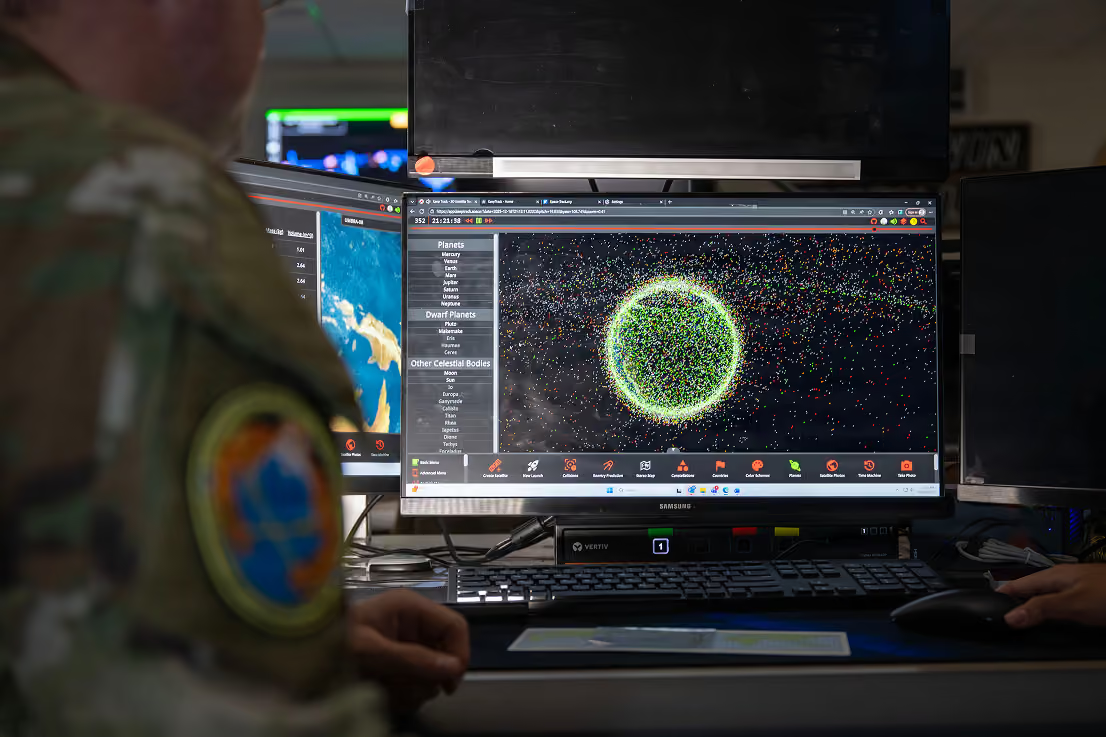
The ground component of the SDN Backbone program is expected to enable dynamic data management via real-time priority routing and boost connectivity for military users across the joint force.
A bipartisan bill has been introduced in Congress to resurrect the Office of Technology Assessment, aimed at providing lawmakers with independent technical expertise to address artificial intelligence and emerging technology challenges facing the legislative branch.
U.S. weapon systems across the military — from fighter jets to guided missiles to electronic warfare platforms — face significant supply chain risk due to dependence on Chinese rare earth materials, which are critical components in thousands of defense applications and largely sourced from China.

LinkedIn: B*mb
Mission Cultivate: Bomb
Mission Cultivate is the free, discreet networking platform for Defense and NatSec. Stop censoring yourself and speak freely in the only space made just for you.
See Mission CultivateHeads up: MC is only for verified users in Defense/War & NatSec. Users include gov, industry, academia, vc, and more. Only available to US, NATO, or select major US allies.


