Just like old times.

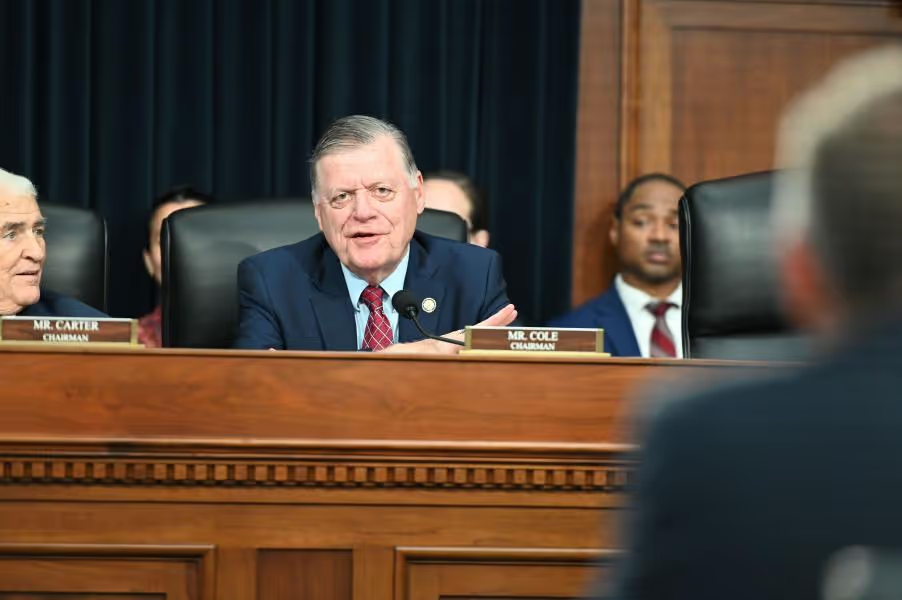

The bill provides more than $2.9 billion for key Pentagon initiatives aimed at shoring up the industrial base and harnessing up-and-coming technology, including the Defense Production Act, Office of Strategic Capital, and Industrial Base Analysis and Sustainment.
Dig Deeper
Also from Breaking Defense, two top appropriators — Sens. Mitch McConnell and Susan Collins — expressed doubt this week that a third reconciliation bill with defense funding will pass, casting further doubt on the Pentagon's plans to use $350 billion in reconciliation money to fund a $1.5 trillion defense budget. And from Air Force Times, at least one senator foresees another government shutdown over military funding.
Top Headlines
Pakistan's prime minister said Friday the U.S. and Iran have agreed to wording of an agreement aimed at ending their war in the Middle East and that mediators were working with both sides to finalize a deal.
In his resignation letter, Healey wrote that the Labour government entered office "recognizing Britain faced a new era of threat which demanded a new era for defense," but that the government had failed to deliver the resources needed to meet those challenges.
After the administration received pushback for choosing federal housing official Bill Pulte as acting director of national intelligence, President Trump said Thursday he will nominate Jay Clayton, who is currently U.S. Attorney for the Southern District of New York.
The Pentagon has begun receiving small first-person view drones ordered through Gauntlet 1 of the "Drone Dominance" program, a $1-billion initiative aimed at rapidly fielding low-cost, expendable unmanned systems.
"We just make other trade-offs, like against exquisite weapons and systems: How much of those are we willing to sacrifice in place of low-cost autonomous weapons," Emil Michael said.
Senators want the Pentagon to create a new autonomous warfare-focused combatant command led by a four-star general, according to the latest version of the annual defense policy bill.
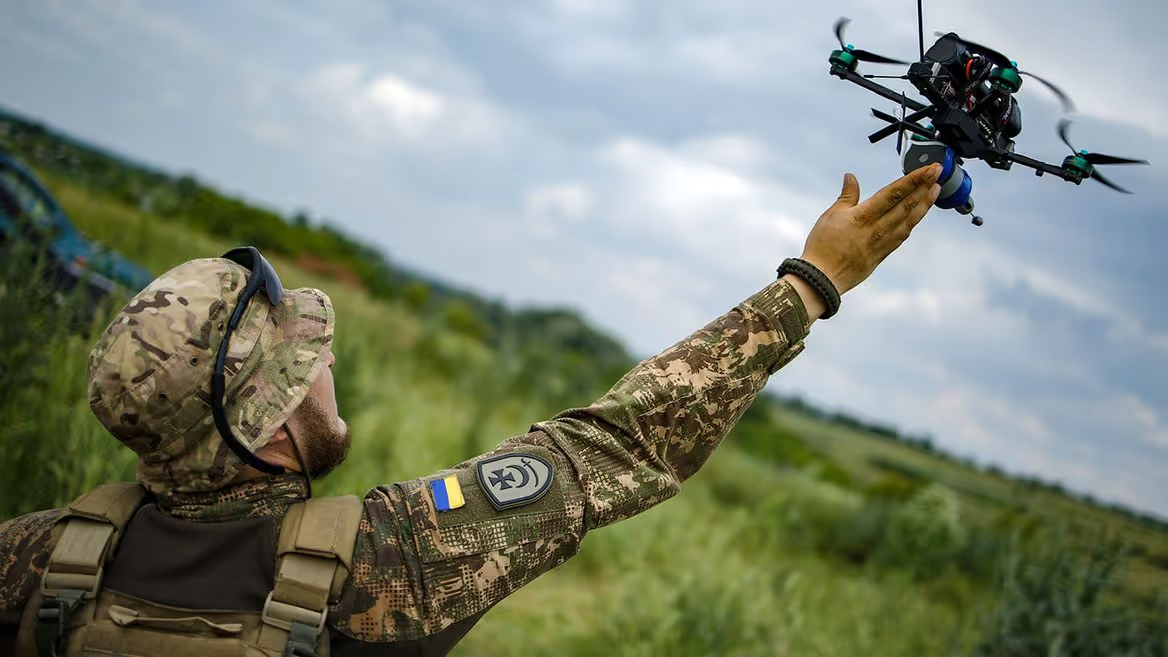
A senior figure in the Ukrainian defense industry said a test took place two years ago involving fully autonomous drones set to destroy anything in a given area, with confirmed casualties. "We just launch it and we know everything will be dead – everything that will be found there in this particular area will be dead," said the maker of the drone used in the test that took place on the front line of the war in Ukraine. "There is no connection to the drone at all, you cannot see the video, nothing … Everything it sees will be killed."
DISA will start transferring combatant commands to a standardized and secure IT network — now known as CommandNet — in fiscal year 2028. The program aims to break down silos between disparate, geographically-isolated networks used by COCOMs and replace them with a single architecture.
Embedded with artificial intelligence, walking robots with mechanical arms are being used increasingly for real-world use cases in factories and laboratories, but the technology still has a long way to go before it's ready for the defense sector, experts said.
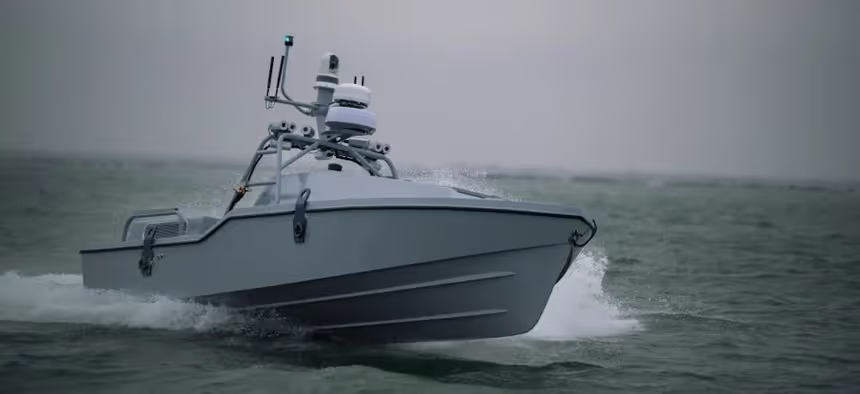
A U.S. Navy drone boat rescued the crew of an Army helicopter downed near the Strait of Hormuz on Monday evening after an AH-64 Apache went down while "patrolling international waters."
Dig Deeper
The fragile ceasefire between Iran and the U.S. was tested this week when a round of attacks and counterattacks was touched off after U.S. Central Command launched waves of strikes on targets in southern Iran in retaliation for what President Trump said was Iran's downing of the Apache, reportedly by an Iranian Shahed drone. Read more from the War Zone.
Why you should read The MC Post every Saturday morning.
We're bringing back the familiar comfort of unfolding the weekend newspaper and catching up on the headlines, without the tacky popups, scammy ads, or bait-and-switch paywalls that you've come to know and hate. In a world racing toward AI-generated content, The MC Post is curated by people for people. Brought to you by Mission Cultivate—the free networking platform for defense and national security pros. Each week here you'll find the latest in defense and industry to keep you informed ... and more importantly, save you some time. (Subscribe)
Feature Opinions
William McHenry argues that America's defense and intelligence agencies have let compliance culture overtake mission execution, slowing operators and weakening national security at the very moment speed matters most.
Michael Garland argues that the federal government's low-cost AI deals may accelerate adoption today but risk creating decades of vendor lock-in unless agencies act now to preserve pricing leverage, portability, and competition.
The Drone Dominance Program is spending $1.1 billion over 18 months to procure more than 340,000 one-way attack systems by January 2028, and the industrial base is responding. The question nobody is answering: Who flies them?
In the weeds
Space systems increasingly provide civilian services, such as communications, navigation, and environmental monitoring, while also supporting military and intelligence functions. This inherent duality, in which the same satellite can serve peaceful and militaristic roles, could make satellite activities difficult for governments, militaries, and commercial operators to interpret.
Happening on MC
If you're not on Mission Cultivate, here's just some of what you're missing.
Opportunities
Event Conversations
Continue Reading
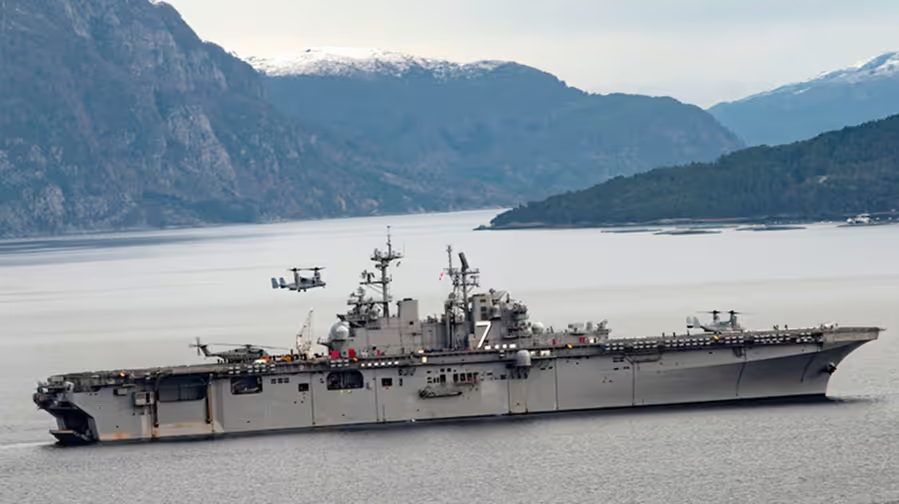
The U.S. plans to significantly reduce the aircraft and warships it makes available for NATO operations in Europe, the New York Times reported on Friday. The decision would limit NATO's ability to launch long-range strikes and conduct surveillance, the report said.
The U.S. military's nuclear and mobility forces are using AI to generate more and better options for logistics and sustainment.
The announcement ends a nearly year-long vacancy in the position in placing a veteran cyber operations leader in charge of the department's $17 billion technology portfolio.
A successful low-power reactor test marks an early step toward deployable nuclear systems that could help military installations reduce dependence on fragile fuel supply chains.
The move is part of CISA's response "to the current threat landscape where AI software services can assist threat actors to find and exploit vulnerabilities," the agency says.

LinkedIn: B*mb
Mission Cultivate: Bomb
Mission Cultivate is the free, discreet networking platform for Defense and Industry. Stop censoring yourself and speak freely in the only space made just for you.
See Mission CultivateHeads up: MC is only for verified users in Defense/War & NatSec. Users include gov, industry, academia, vc, and more. Only available to US, NATO, or select major US allies.